

Piano
Educational Philosophy & Study Program
The Piano Department of the Intercultural Conservatory of Music is founded on the belief that learning the piano is not merely the acquisition of technical skills but also a journey of artistic discovery, cultural awareness, and personal growth.
Designed by Professor Alberto Nones, the program combines the highest standards of European piano pedagogy with an intercultural vision of music education, offering students an immersive experience in which technical mastery, stylistic understanding, and individual artistic identity develop together.
Rather than following a rigid, standardized curriculum, the Piano Department offers two complementary educational pathways, each of which responds to different artistic aspirations while sharing the same educational philosophy.
Pathway I – Artistic Development Program
is conceived as a fully personalized course of study for students who wish to deepen their relationship with the piano without necessarily pursuing an academic career. This pathway is intentionally flexible: repertoire, technical objectives, artistic projects, and learning pace are designed around the student’s interests, goals, and musical curiosity. While the professor provides guidance, proposes new repertoire, and gradually broadens the student’s artistic horizons, the educational journey remains fundamentally shaped by the student’s own aspirations. This freedom allows each pianist to cultivate a genuine personal relationship with music while progressively developing technical confidence, stylistic awareness, and interpretative maturity.
Pathway II – European Conservatory Preparation Program
is specifically designed for students intending to apply for admission to music institutions of higher education throughout Europe. Particular attention is given to the admission requirements of the Italian Conservatory system, whose entrance examinations possess distinctive technical and musical characteristics, while also preparing students for auditions at universities, conservatories, and music academies in Germany, Austria, Switzerland, France, Belgium, Spain, Portugal, and other European countries. Beyond technical preparation and repertoire selection, students receive strategic guidance for every stage of the admission process, including repertoire planning, audition simulation, artistic presentation, portfolio preparation, and the development of the confidence required to perform successfully in highly competitive examinations.
Technical development remains an essential pillar of both pathways. Students systematically cultivate finger independence, sound production, touch, pedaling, coordination, virtuosity, and stylistic control through carefully selected exercises, études, and repertoire. Technique, however, is never considered an end in itself, but rather the indispensable language through which artistic ideas can be expressed with freedom, elegance, and authenticity.
Equally important is the development of an individual interpretative voice. Students are encouraged to move beyond imitation, learning to approach every composition through historical understanding, analytical thinking, imagination, and emotional intelligence. The objective is to form musicians capable of making informed artistic choices while remaining faithful to the composer’s intentions and aware of the rich diversity of performance traditions.
The intercultural identity of the Conservatory represents one of the defining features of the program. Alongside the study of the great European piano repertoire—from Bach and Mozart to Chopin, Debussy, Rachmaninov, and contemporary composers—students are encouraged to explore musical languages from different cultural traditions. Through dialogue with artists and fellow students from diverse backgrounds, they develop a broad international perspective, discovering how different musical cultures enrich one another while sharing universal artistic and humanistic values.
Musicianship is cultivated as an integrated discipline. Sight-reading, ear training, harmonic understanding, score analysis, stylistic awareness, memorization strategies, and performance practice are developed simultaneously, enabling students to acquire not only technical proficiency but also artistic independence and intellectual curiosity.
The international character of the program extends beyond weekly lessons. Subject to sufficient interest and organizational feasibility, students may be offered the opportunity to participate in an optional end-of-year ICM Masterclass in Italy. The dates, venue, and participation costs for this intensive residential experience will be announced separately. The program would include individual lessons, group masterclasses, public performances, and intercultural artistic activities. Although not a compulsory component of the curriculum, it is envisioned as the ideal culmination of each annual cycle of study, allowing students to experience the artistic, cultural, and human values that define the Intercultural Conservatory of Music in a shared international environment.
Ultimately, the Piano Department seeks to educate complete musicians rather than simply skilled pianists. By integrating technical excellence, artistic individuality, intercultural openness, and humanistic values, the program prepares students to become thoughtful performers, curious learners, and creative ambassadors of music in an increasingly interconnected world.
Teaching Languages:
- English
- German
- Italian
- Spanish
Instructor
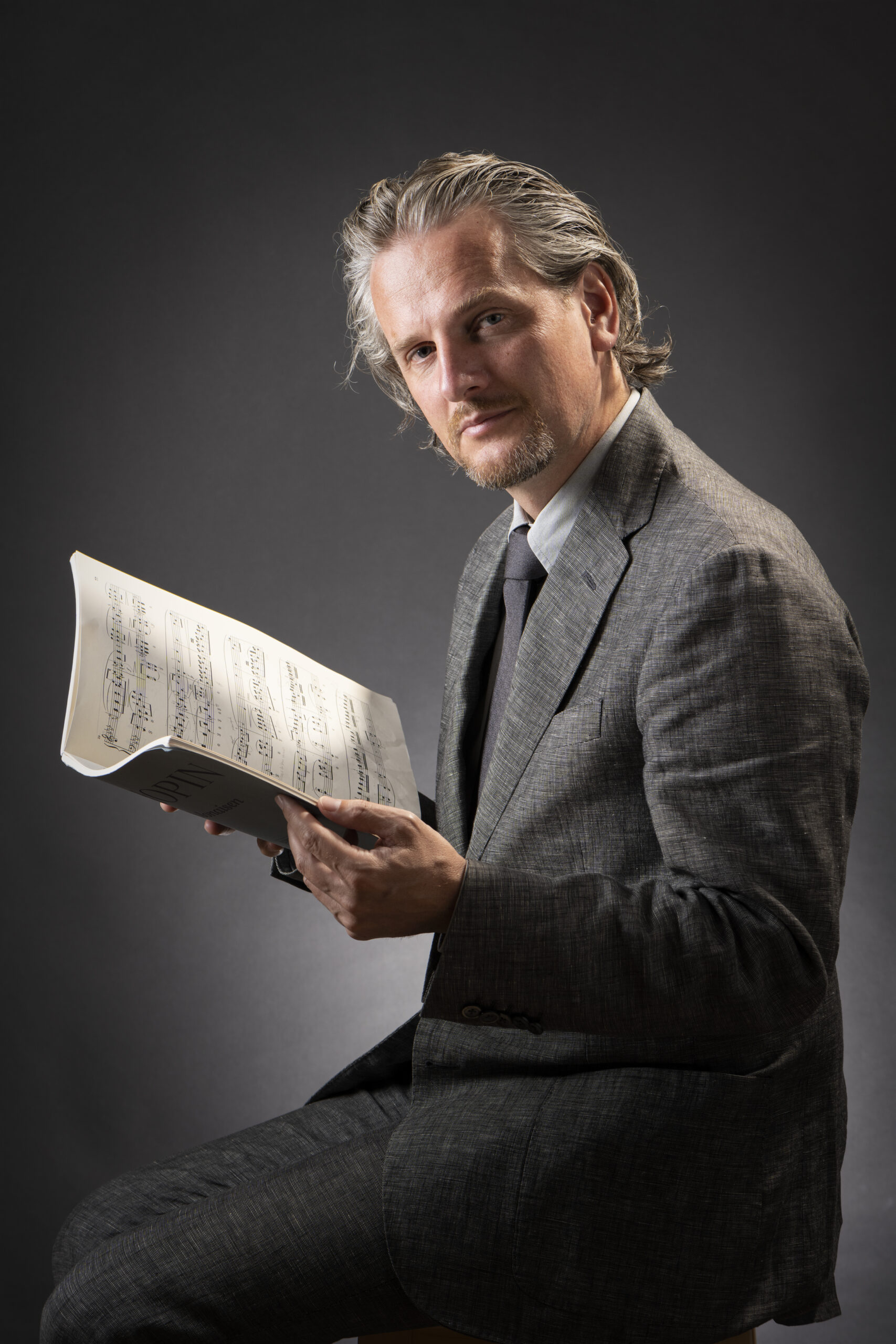
Alberto Nones
Alberto Nones (Trento, Italy, 1975) is a pianist, philosopher, music historian, and tenured Professor at the prestigious “G. Rossini” Conservatory of Music of Pesaro, Italy. He is widely regarded as one of the most distinctive intellectual and artistic voices of his generation, combining high-level performance, scholarly research, and interdisciplinary reflection in a way that is exceptionally rare in today’s musical landscape. His work is driven by a broad cultural vision that seeks to rethink the meaning of making music in the twenty-first century and to renew our interpretative perspectives through the dialogue between music, philosophy, and society.
For me, music is life itself, with all its sorrows and its joys, its harmonies and its conflicts, translated into sound. Nothing more, and nothing less. Or perhaps something more: a bridge to the divine, to the unseen and the transcendent; the one thing that may outlive us, the final trace of what we have been.
Ready to pursue your dream?
The interplay between the best of Eastern and Western traditions starts here.