

Trumpet
Inspiring excellence in an Euro/American studio setting
Class Objectives
This class objectives document outlines the core areas of focus for private trumpet instruction, emphasizing both technical development and musical understanding across a range of repertoire and pedagogical contexts.
Fundamental Skills Development
Students will build and refine essential trumpet fundamentals that form the foundation of all performance. Emphasis is placed on:
- Sound production: Developing a characteristic, controlled, and resonant tone
- Intonation: Achieving accurate pitch through listening and adjustment
- Articulation: Mastering clarity and variety in tonguing styles
- Rhythm: Strengthening timing, subdivision, and rhythmic precision
- Style: Understanding and applying appropriate stylistic nuances across genres
Repertoire: Orchestral and Solo Literature
Students will engage with standard and advanced trumpet repertoire to develop musical interpretation and technical proficiency:
- Orchestral excerpts and full parts: Preparation of key works from the orchestral canon, focusing on accuracy, endurance, and stylistic authenticity
- Concertos and sonatas: Study of solo literature selected to match each student’s level and goals
Multi-Instrument Proficiency
Students will gain experience on various members of the trumpet family to broaden versatility:
- Bb Trumpet
- Flugelhorn
- Eb/D Trumpet
- Piccolo Trumpet
- C Trumpet Piston/Rotary
Studies and Etudes
A comprehensive understanding of traditional and modern trumpet studies will be developed:
- Exploration of standard etude books and technical studies
- Application of etudes to reinforce fundamental skills and musicality
- Development of practice strategies for technical and expressive growth
Trumpet Pedagogy and Historical Context
Students will gain insight into the broader context of trumpet playing and instruction:
- Pedagogy: Introduction to effective teaching methods and learning strategies
- History: Overview of the trumpet’s evolution, key performers, and influential repertoire
This structured approach ensures students develop both the technical mastery and artistic awareness necessary for well-rounded trumpet performance.
Performance Skills and Professional Preparation
Students will develop the skills necessary for confident, polished performance in a variety of settings:
- Solo and ensemble performance: Building confidence through regular performance opportunities
- Audition preparation: Developing strategies for orchestral, academic, and professional auditions
- Practice techniques: Learning efficient, goal-oriented practice methods and time management
- Stage presence: Cultivating poise, focus, and communication with an audience
- Self-evaluation: Using recording and critical listening to assess and improve performance
Our Instructor’s Teaching Philosophy
The relationship between student and teacher is a unique one that must integrate the various needs of the student as well as the personalities of both the student and the teacher. The teacher must help the student accomplish the concrete work of developing a mature trumpet sound, excellent technique, and polishing the student’s style in solo, chamber, symphonic and orchestral playing. In addition to working on the essentials of instrumental performance, the private teacher relationship must also serve to launch the student into their own playing and teaching career.
A teacher inherently serves as a model for the student and must demonstrate not only a high level of musicianship and technique but also model professional standards in every way. A teacher should be an active and participating member of significant professional organizations and be a leader in the field, earning the respect of their colleagues both inside and outside the music school. Seeing their teacher actively engaged in the music community provides a model for students, as well as giving them access to resources and information that will help them advance in their careers.
It is important for a teacher at this level to have an active and distinguished playing career, or to have had such a career in the past. This experience is the only way to attain a detailed familiarity with the solo, chamber, symphonic and orchestral literature. Students need to be able to look up to their teacher as a role model, both in their professional demeanor and in their musical career.
Although trumpet performance demands that a player knows how to take charge when in a leadership situation, professional life is most rewarding for players who are confident without being egotistical. Students must learn how to develop confidence in themselves while keeping their treatment of others on an even keel and focusing on making collaborative music with other professionals. A good teacher serves as a model for students in cultivating these qualities.
While high expectations provide students with an opportunity to excel, the teacher’s expectations must be accompanied by thoughtfulness and respect for the student as a whole person. The teacher must earn the respect of their students through excellent preparation, courtesy, and musical integrity, and by ensuring that musical expression remains the ultimate focus. My students know that technique will follow good musicianship, but good musicianship will not always follow good technique. Musical expression is the inspiration to reach the highest level of technical prowess.
No two students are the same, and the same student changes over the course of the relationship. Good observation, attention and insight are needed for the teacher to support each student well while keeping them constantly challenged. The teacher must be strong-minded enough to know when they can push a student, as well as having the flexibility to incorporate the individual student’s interests so that they stay engaged and motivated.
I expect my students to be prepared for their lesson each week, and I set short-term goals for them, so they feel a sense of accomplishment. My students and I collaborate in selecting pieces for their juries and recitals, so that they are as excited about what they are performing as I am excited to share the music with them. Although I will make the ultimate decision, if necessary, they are more invested in a piece they have helped to choose.
I prefer to use an open studio format, to encourage supportiveness and a sense of community among the students. The students participate together in performance classes, offering support and constructive feedback to each other. The supportive environment creates a positive energy that encourages innovation and active engagement in the studio, lending a conservatory feel among students with diverse educational goals. Teacher-led warm-ups in the morning several times each week contribute to a sense of community as well as providing a source of ideas for this important component of practicing.
Students are also encouraged to audit other students’ lessons (with the permission of the student being audited). The student taking the lesson instinctively moves into performance mode, raising their level of attention and amount of learning occurring in the lesson and providing them with motivation to raise their technique outside of the lesson. Meanwhile, there are several benefits for the student observing the lesson: (1) they receive the benefit of hearing the teacher’s critique and suggestions in the context of another student’s playing; (2) they feel a connection with another student who is facing many of the same technical challenges; (3) they are able to get ideas for problem-solving their own technical difficulties; and (4) they can witness a model of teaching that they can draw upon later in their own teaching.
The open studio environment serves as a catalyst for accelerated learning, in which the students share the learning process together in a supportive, teacher-guided environment. Students in this environment learn to receive constructive criticism from their peers as an opportunity to improve their own playing and to raise the performance level of the studio.
Students in my trumpet studio should be prepared for the options and opportunities they will have upon graduation and feel supported in making intelligent choices about their studies and career. The result for every student, in addition to their individual long-term educational goals, should be a love and appreciation of music, a good working knowledge of the trumpet, and a broad, accurate understanding of musical styles so that they have a framework upon which to build as they embark on their own playing and teaching careers.
Teaching Language
- English
Instructor
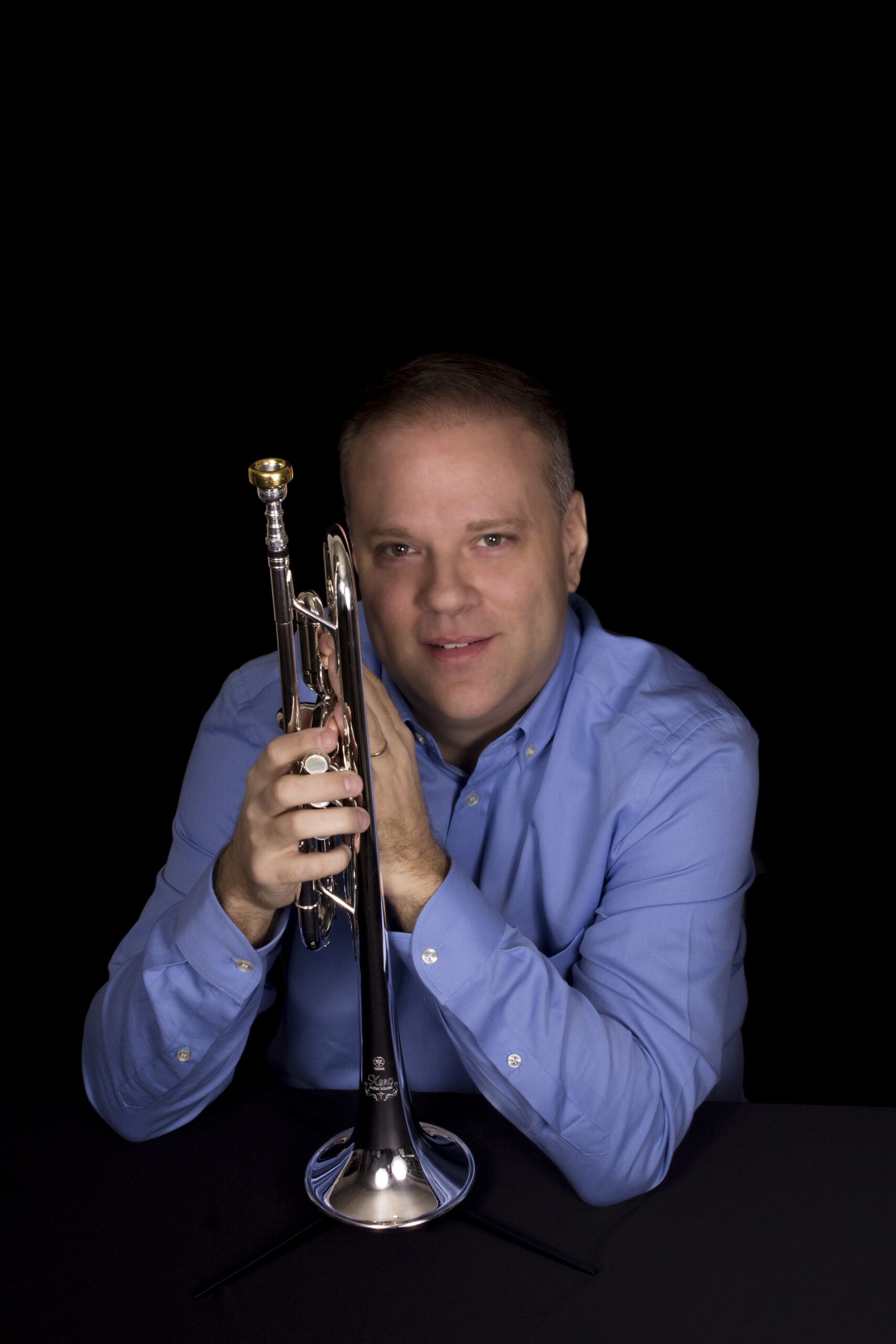
Adrian Dwight Griffin
International orchestral musician and trumpet soloist Adrian Griffin is enjoying a vivid and busy career. Prior to his appointment of principal trumpet with the Orquesta Sinfonica de Monterrey, Adrian has held positions as principal trumpet with the Filarmonica de Jalisco, co-principal trumpet with the Orquesta and fourth/utility trumpet with the Virginia Symphony Orchestra. As well, Adrian held the position of Professor of Trumpet at the University of Texas at San Antonio.
In every note I write, I try to plant a seed of peace in a land exhausted by war, and to offer the children of Palestine a window to a wider sky.
Ready to pursue your dream?
The interplay between the best of Eastern and Western traditions starts here.