
Clarinet
Course Description & Methodology
Clarinet courses aim to provide the necessary preparation to tackle the main clarinet repertoire, tailored to the student’s needs and goals. Each student will follow a personalized program, depending on whether they want to play purely for pleasure or prepare for a professional career.
In any case, the fundamental elements of the course of study will focus on these cornerstones and objectives:
- Acquire technical preparation, always aimed at artistic goals, with practice and study considered tools for artistic expression and for fully enjoying the unique experience of making music.
- Acquire a personal and original interpretative approach, which eschews copying and imitation and aims for a conscious and thoughtful musical interpretation.
- Reflect on the idea of “beautiful sound” (how a beautiful sound is formed, how it is achieved, and how it adapts to various types of repertoire or musical situations).
- Acquire a harmonic awareness that goes beyond the individual part played by the clarinet through participation in ensemble music.
- Respect and understand the musical text and the composer’s intentions through reflection on autograph sources, the nature and importance of signs of expression and phrasing, and the characteristics and reliability of editions.
- Understand the historical, cultural, and artistic context of a piece of music; recognize the unity that links the arts (literature, visual arts, dance, theater, and music) and forms of thought (philosophy and history); and explain how this unity influences interpretative choices.
- Understand the need to know a wide variety of musical genres, the repertoire of other instruments or those that do not include the clarinet, and to know music composed before the emergence of the clarinet (for example, the memorable works of Monteverdi, Bach, and Händel).
- Understand the main tools for bibliographical research and artistic research to achieve a comprehensive understanding of the work and the composer being performed.
- Recognize music as a powerful tool for social development, broadening horizons, and promoting intercultural understanding, and recognizing how essential the humanistic component is to society.
Teaching Languages:
- English
- Italian
- Spanish
Instructor
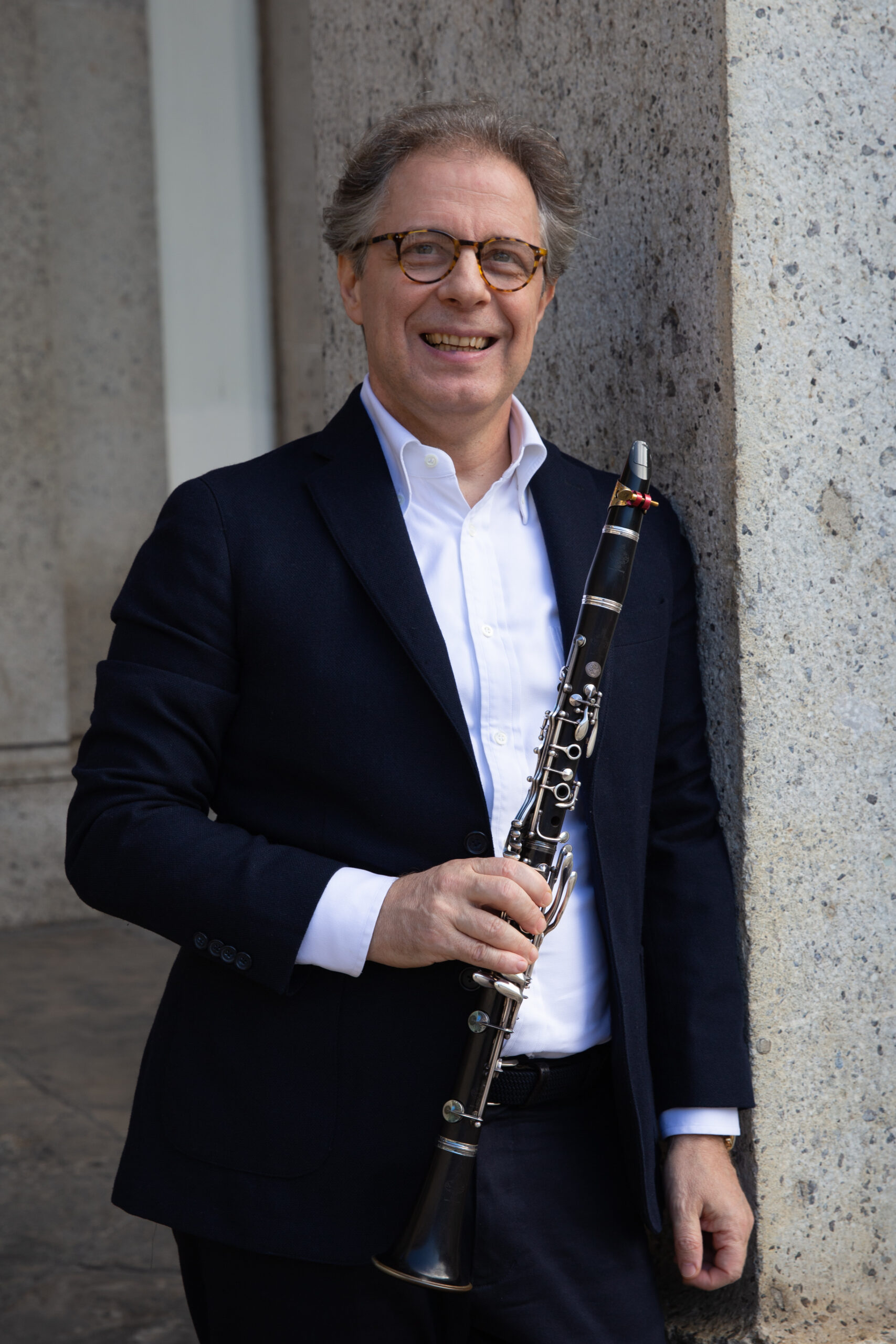
Andrea Massimo Grassi
The passion for sharing knowledge and musical culture drives Andrea Massimo Grassi’s performances, musical research, and training. Born in Milan, he graduated in clarinet at the Conservatorio ‘G. Verdi, under the guidance of Primo Borali. Later, he specialized in chamber music with Vittorio Luna and with Masha Yanouchevsky, Maureen Jones, and Dario De Rosa. In 1995, he received the prestigious ‘Diploma d’onore’ from the Accademia Musicale Chigiana of Siena, and in 1996, the diploma of the Accademia Internazionale di Musica of Biella as a student of Antony Pay. He completed his musical studies, graduating with honors in modern literature at the University of Parma and gaining a PhD in Musical Philology at the Facoltà di Musicologia of Cremona.
Seneca: Si detur sapientia, ut illam inclusam teneam nec enuntiem, reiciam / If wisdom were given me with the provision that I must keep it to myself and not share it, I would reject it.
Ready to pursue your dream?
The interplay between the best of Eastern and Western traditions starts here.